

Background:
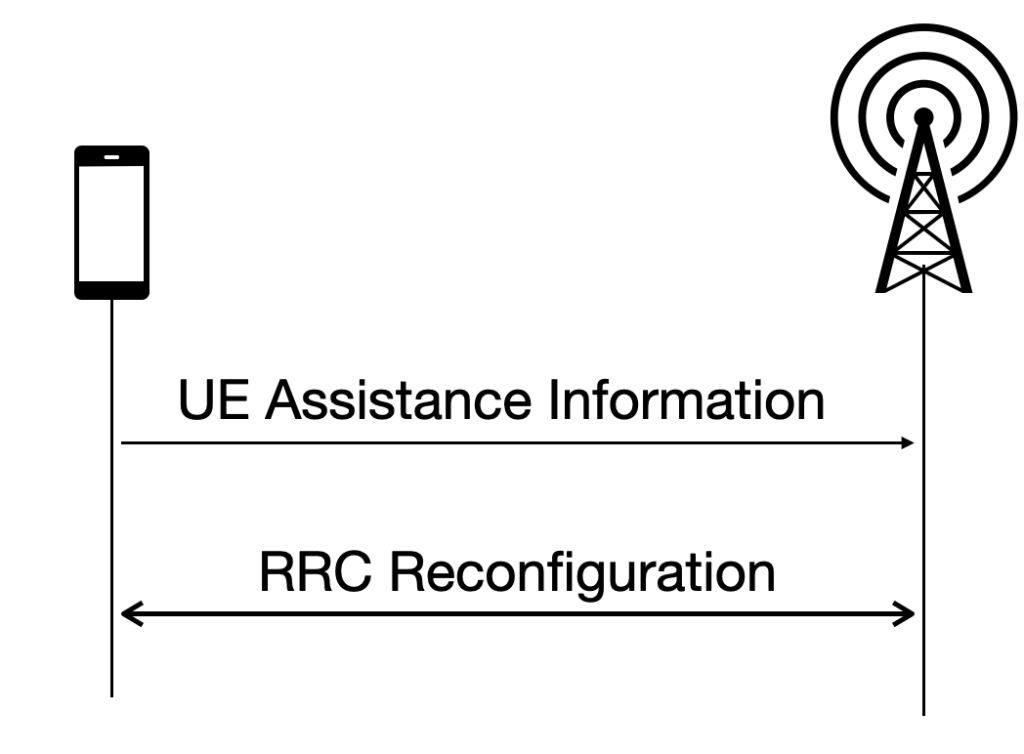
Battery consumption is one of the primary contributors of modern RF power consumption. 3GPP introduced already introduced various connected mode power saving features in earlier releases 15 and 16 to optimise UE battery consumption while operating at very high channel bandwidths. So additionally with rel.17 3GPP introduced couple more techniques to improve device battery performance.
- PDCCH Skipping
- SSSG Switching
PDCCH Monitor skipping:
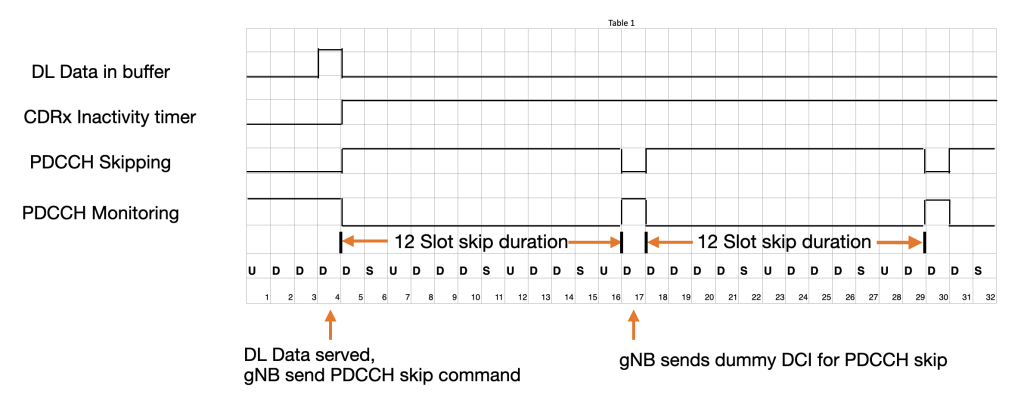
DCI based PDCCH skipping: PDCCH skip allows a UE to spend less amount of time in monitoring PDCCH monitoring which in turn helps device save battery consumption. Network through RRC reconfiguration configures skipping durations in the units of slots with an IE named PDCCH-Skippingdurationlist-r17. But when to implement these duration and what duration to be applied depends on the DCI indication through PDCCH channel.
DCI format 0_1 has a field with name PDCCH Monitoring Adaptation Indication tells which duration to be applied, this is a 2 bit field depends on the no skip duration values.

From below network indicated post DL data served, using a command to go for PDCCH skip and it further maximises by sending a dummy DCI command to continue to extend this duration as there is not much data buffer.
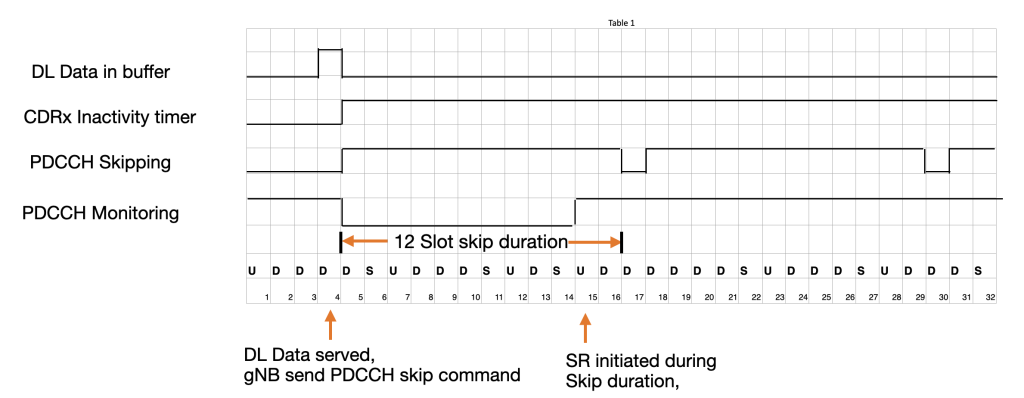
But during this skip mode if there is need for UE to send SR(Scheduling Request) in anticipation of uplink data to be sent then device will not honour this skip duration and it stops and sends SR and moves to PDCCH monitoring mode.
From below there is 12 slot duration which UE is undergoes but device stops and sends a SR without waiting to complete the skip cycle.
SSSG Switching: Search space set Group Switching
Main aim of SSSG is to dynamically switch between a set of SSSGs which are already configured through RRC per active BWP of the serving cell. Here are the following steps which helps to switch between these configured SSSGs.
- RRC configures set of SSSGs i.e SSSG0 and SSSG1 per active BWP where switching is supported.
- gNB will monitor traffic and buffer capacity to determine when to initiate SSSG switching.
- gNB may transmit DCI to switch between SSSG.
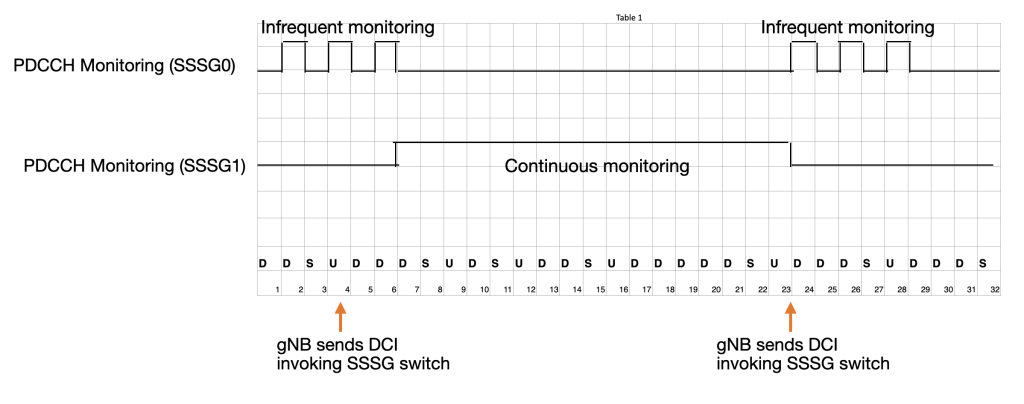
for lower data gNB will direct to move to SSSG0 and for high data data and low latency traffic network will direct or switch UE to use SSSG1 for continuous monitoring.