


The voice of wifi is a necessity that arose from the growing trend of WFH during COVID-19. People were confined to four walls at the time, and cellular connections were sometimes spotty, particularly in high-rise apartments along with increasing congestion over cellular path.
In all fairness Wi-Fi finally becomes inevitable change back then and even now it still continues strong sustaining stiff competition from cellular technologies like 5g during its commercial availability across pan india. There is another problem solved with the raise of vowifi is offloading traffic from cellular. currently 5G may have lot of bandwidth but back then in 4g where maximum available bandwidth not more than 20MHz. so user once back to home or office will be offloaded unknowingly to wifi which helps to free cellular channels.
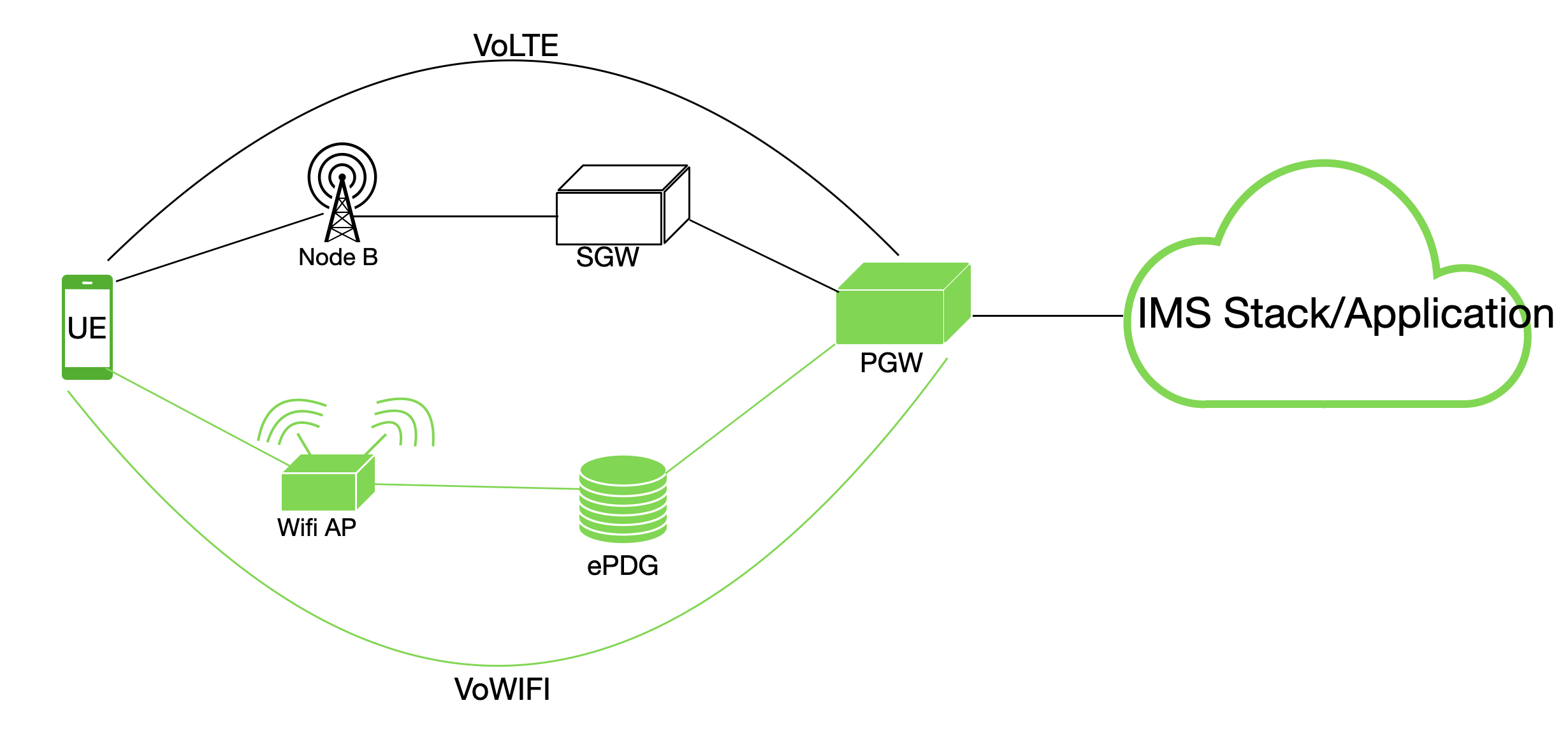
The architecture shown below. the highlighted components are involved the path for enabling voice over wifi. The common element between both transports is PGW where this provides differentiates the path by providing different IP addresses. This also involves in corodinating/triggering the handover when device tries to move from one transport to other.
IPSEC connection:
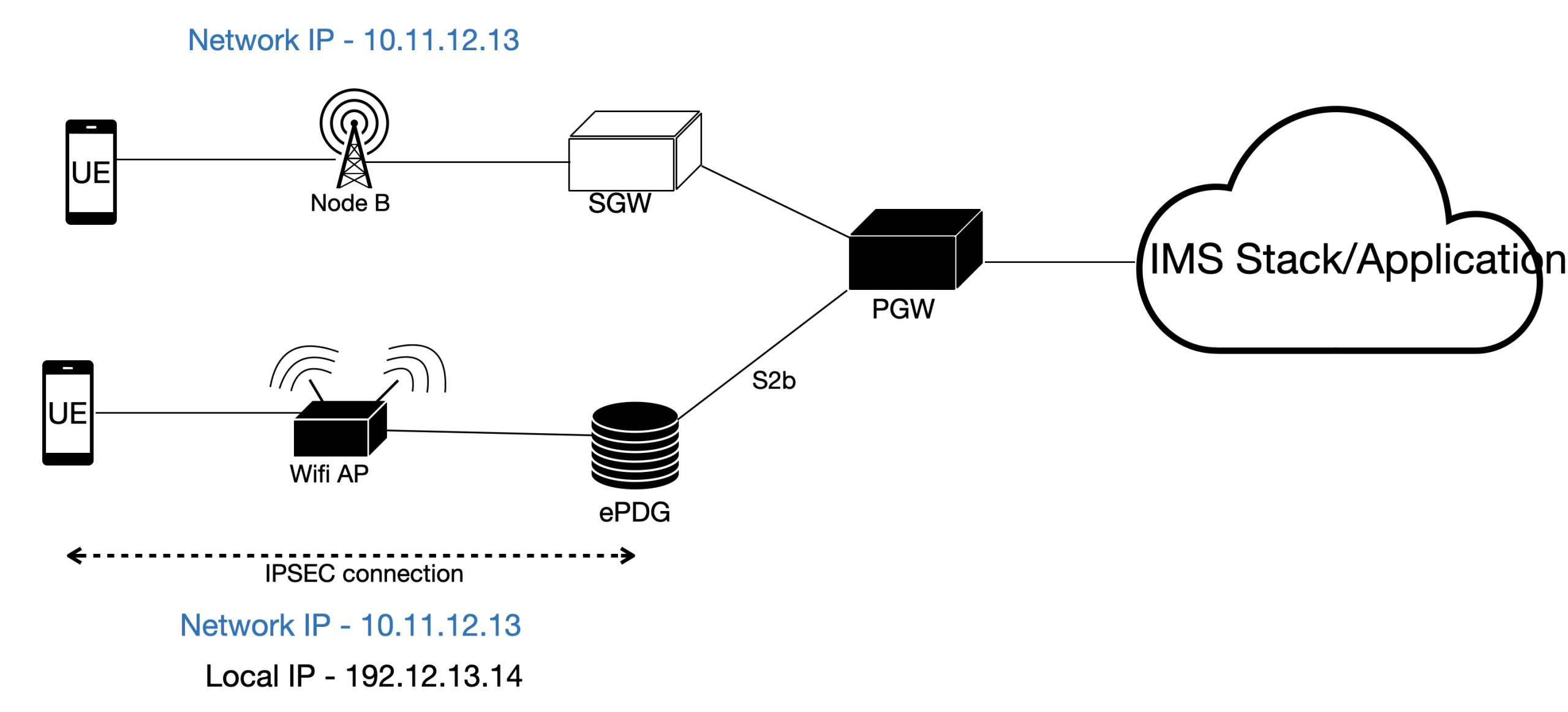
IPSEC (Internet Protocol security) connection establishment between UE and ePDG. any IP packet enters into IP network needs to go through certain security protocols to protect them from any middle man attacks. so these packets will be authenticated and encrypted properly before entering into data stream. after ePDG packets go through IP networks through GTP tunnel towards PGW.
Finding ePDG address:
UE tries to construct a tunnel between itself and ePDG(evolved packet domain gateway) but sending a FQDN query to DNS server to resolve by constructing query as per 3GPP it takes the form mcc.mnc.3gppnetwork.org. This helps by find working epdg addresses. it can be either an IPv4 or IPv6 based on the query from device capability, if it mentions type A or AAAA where former for v4 and later for v6 address. if device has capability for both IPv4v6 then device send both its capabilities to the network DNS.
FQDN query epdg.epc.mncXXX.mccXXX.pub.3gppnetwork.org.: IPv4 or IPv6 address. protocol used between UE and ePDG connection is IKE internet key exchange.
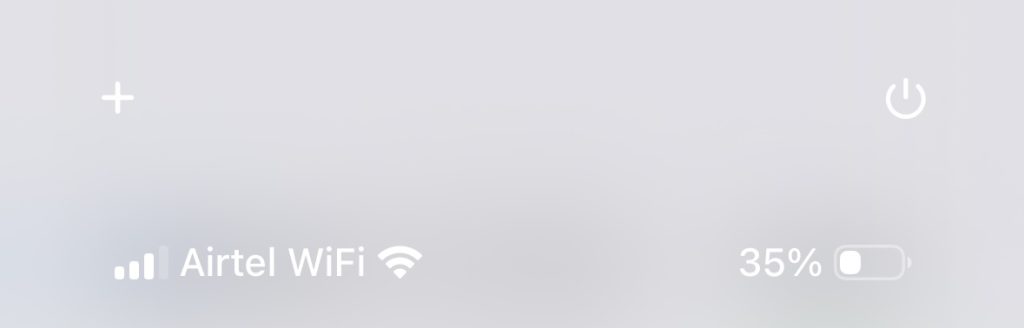
Once the tunnel is established successfully device will sent IMS register request message which is similar like it does in cellular network and gets 401 challenge and device replies with nonce and gets 200ok to say successful registration. from there device icon changes like displayed below. at this stage both MO and MT calls will flow through wifi.
VoWIFI registration can be identified through SIP signalling. In SIP invite and its subsequent transactions indicate the transport, here in this case it shows i-WLAN unlike EUTRAN in 4G volte and NR in 5G vonr call.
SIP invite
P-Access-Network-Info: IEEE-802.11;i-wlan-node-id=ffffffffffff
Mobility between WIFI to Cellular and vice versa:
wifi to wifi handover happens through process called Reassociation.During these handovers UE gets assigned with two IP addresses, one from local WIFI AP and other one from cellular network particularly PGW component. local will tend to change depending on different wifis device switch in between whereas network IP will not change.
Below are the possible handovers:
- Wifi to Wifi
- wifi to cellular and vice versa.
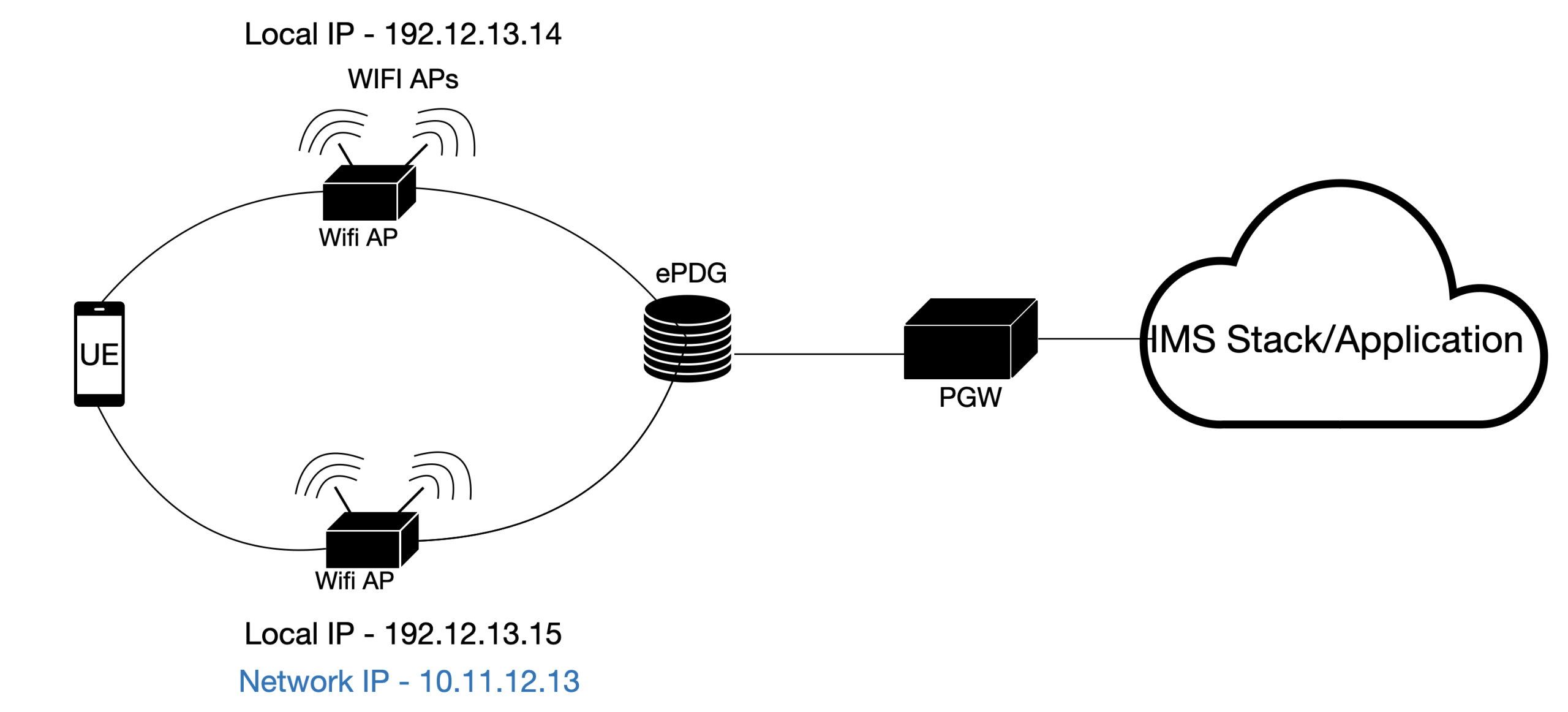
WIFI to cellular and cellular Handover where network IP will be static and only local IP will be changed.
Refercence:
3gpp 23.402 and 3gpp 23.203


34 comments
Start earning every time someone clicks—join now! https://shorturl.fm/qek0P
Share your unique link and earn up to 40% commission! https://shorturl.fm/7SmlD
Partner with us and enjoy recurring commission payouts! https://shorturl.fm/9NjiH
Unlock exclusive affiliate perks—register now! https://shorturl.fm/Qez1q
Join our affiliate community and maximize your profits—sign up now! https://shorturl.fm/pGwoF
Join our affiliate program today and start earning up to 30% commission—sign up now! https://shorturl.fm/Xtht0
Boost your profits with our affiliate program—apply today! https://shorturl.fm/Qg9hY
Share your link, earn rewards—sign up for our affiliate program! https://shorturl.fm/zDwGR
Boost your income—enroll in our affiliate program today! https://shorturl.fm/vr1sD
Share our products, earn up to 40% per sale—apply today! https://shorturl.fm/rfgBX
Monetize your influence—become an affiliate today! https://shorturl.fm/NPvW3
Earn passive income with every click—sign up today! https://shorturl.fm/GOT7r
Start earning passive income—become our affiliate partner! https://shorturl.fm/buVG2
Join our affiliate program and start earning commissions today—sign up now! https://shorturl.fm/wOYcA
Turn your network into income—apply to our affiliate program! https://shorturl.fm/AYhyN
Unlock exclusive affiliate perks—register now! https://shorturl.fm/vrZN8
Start profiting from your network—sign up today! https://shorturl.fm/3GQTY
Unlock exclusive affiliate perks—register now! https://shorturl.fm/8z9GJ
Promote our brand and watch your income grow—join today! https://shorturl.fm/9wPE7
Get paid for every referral—enroll in our affiliate program! https://shorturl.fm/p6jkO
Partner with us for generous payouts—sign up today! https://shorturl.fm/ojanI
Start sharing our link and start earning today! https://shorturl.fm/Jldon
Start sharing, start earning—become our affiliate today! https://shorturl.fm/xq1cV
Sign up now and access top-converting affiliate offers! https://shorturl.fm/9j7Gh
Monetize your audience—become an affiliate partner now! https://shorturl.fm/QoUsW
Promote our products—get paid for every sale you generate! https://shorturl.fm/AiA52
Unlock exclusive affiliate perks—register now! https://shorturl.fm/ycD4e
Join our affiliate program today and earn generous commissions! https://shorturl.fm/h7rFB
https://shorturl.fm/8A3DT
https://shorturl.fm/n5tvH
https://shorturl.fm/JKP8q
https://shorturl.fm/UTAqE
https://shorturl.fm/mmkzk
https://shorturl.fm/u7OcP
Comments are closed.